IGF-1 LR3 Guide: Benefits, Uses & Risks for Bodybuilding
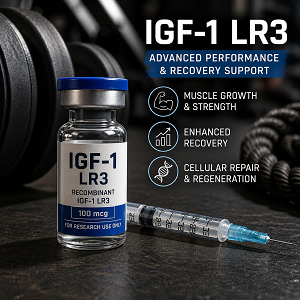 IGF-1 LR3 Guide: Benefits, Uses & Risks for Bodybuilding
🔍 What is IGF-1 LR3?
IGF-1 LR3 (Insulin-Like Growth Factor-1 Long R3) is a modified version of natural IGF-1, a hormone involved in cell growth, recovery, and muscle development. The LR3 variant has a longer half-life, meaning it stays active in the body longer than standard IGF-1.
It’s often discussed in bodybuilding circles due to its potential role in:
- Muscle cell growth (hyperplasia)
- Enhanced recovery
- Nutrient partitioning
🧬 How IGF-1 LR3 Works
IGF-1 LR3 interacts with IGF-1 receptors in muscle tissue, helping to:
- Stimulate protein synthesis
- Support muscle repair
- Improve nutrient uptake into muscle cells
Unlike anabolic steroids, it does not directly act on androgen receptors, but it still influences growth pathways.
🏋️ Uses in Bodybuilding
Athletes explore IGF-1 LR3 for:
- Supporting lean muscle development
- Enhancing post-workout recovery
- Improving muscle fullness and pumps
- Complementing structured training and nutrition
⚖️ Dosage & Cycles (General Information)
Because IGF-1 LR3 is not approved for bodybuilding use, there is no medically established dosing protocol for performance purposes.
General discussions in fitness communities often mention:
- Short-term use phases (several weeks)
- Careful monitoring due to potency
⚠️ Important: Any use should be medically supervised, as hormone manipulation carries risks.
💥 Potential Benefits
| Benefit | Notes |
|---|---|
| Muscle Growth Support | May enhance cellular growth signals |
| Faster Recovery | Helps repair muscle tissue |
| Nutrient Utilization | Supports better uptake of nutrients |
| Lean Mass Development | Often associated with “dry” gains |
⚠️ Side Effects & Risks
IGF-1 LR3 is powerful and not risk-free.
Possible concerns include:
- Hypoglycemia (low blood sugar)
- Headaches or fatigue
- Joint discomfort
- Water retention
- Long-term safety concerns (including abnormal cell growth)
Because IGF-1 influences cell proliferation, misuse may carry serious health risks.
🛡️ Precautions
- Not approved for recreational or bodybuilding use
- Avoid combining with other hormone-altering substances without guidance
- Monitor blood glucose and overall health markers
🔄 Interactions
IGF-1 LR3 may interact with:
- Insulin or glucose-regulating compounds
- Growth hormone (GH)
- Other performance-enhancing substances
Stacking increases complexity and risk.
🚨 Overdose Risks
Excessive exposure may lead to:
- Severe hypoglycemia
- Organ stress
- Hormonal imbalance
📈 Results Expectations
When paired with proper training and nutrition:
- Improved recovery speed
- Subtle increases in lean mass
- Enhanced muscle “fullness”
Results vary widely and depend heavily on diet, training, and genetics.
💬 Reviews (Community Insight)
“Recovery felt faster, but I had to watch my blood sugar closely.”
“Not a magic compound—diet and training still matter most.”
“Potent, but definitely not beginner-friendly.”
❓ IGF-1 LR3 Guide: FAQ
Q: Is IGF-1 LR3 a steroid?
A: No, it’s a peptide hormone, not an anabolic steroid.
Q: Is it legal?
A: Its legality varies by country and is often restricted to research use.
Q: How fast does it work?
A: Effects may be noticed within weeks, mainly in recovery and muscle fullness.
Q: Is it safe?
A: Safety is not fully established for non-medical use. Risks increase without supervision.
✅ Conclusion
IGF-1 LR3 is a powerful peptide linked to muscle growth and recovery, but it comes with significant risks and limited clinical approval for performance use. For most athletes, optimizing training, nutrition, sleep, and recovery remains the safest and most effective strategy.
What is Cagrilintide 10mg?
Ipamorelin Peptide Guide | Benefits, Dosage & Bodybuilding Results

Peptide Shop: A Trusted Source for Research Peptides and Scientific Innovation
About Author
